
Our Craft
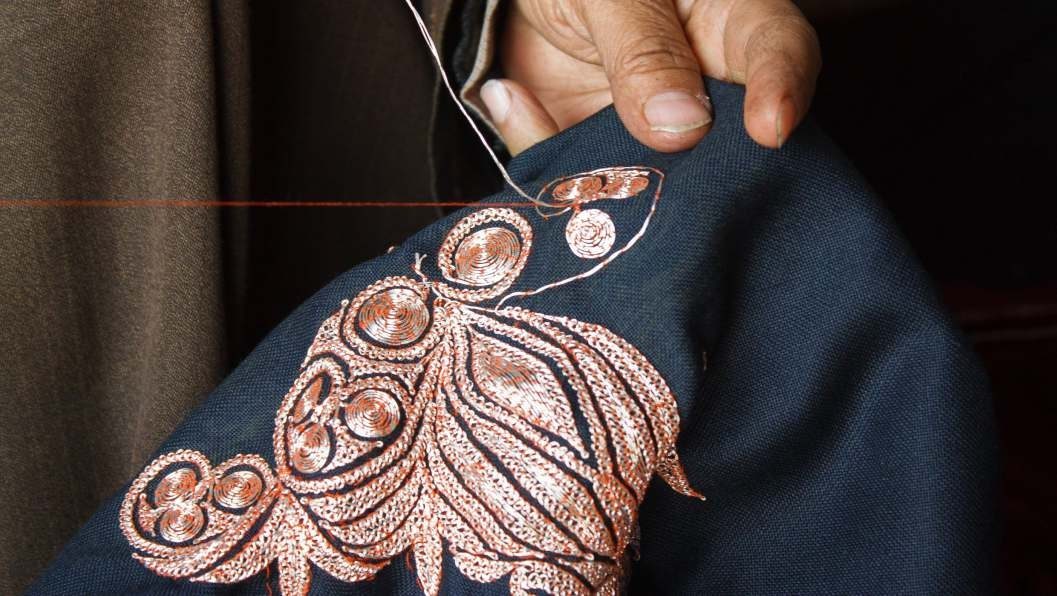
Needle, thread and a great deal of patience — the hand embroidery of Haryana, and the traditions it carries.
Flower-work, stitched over years
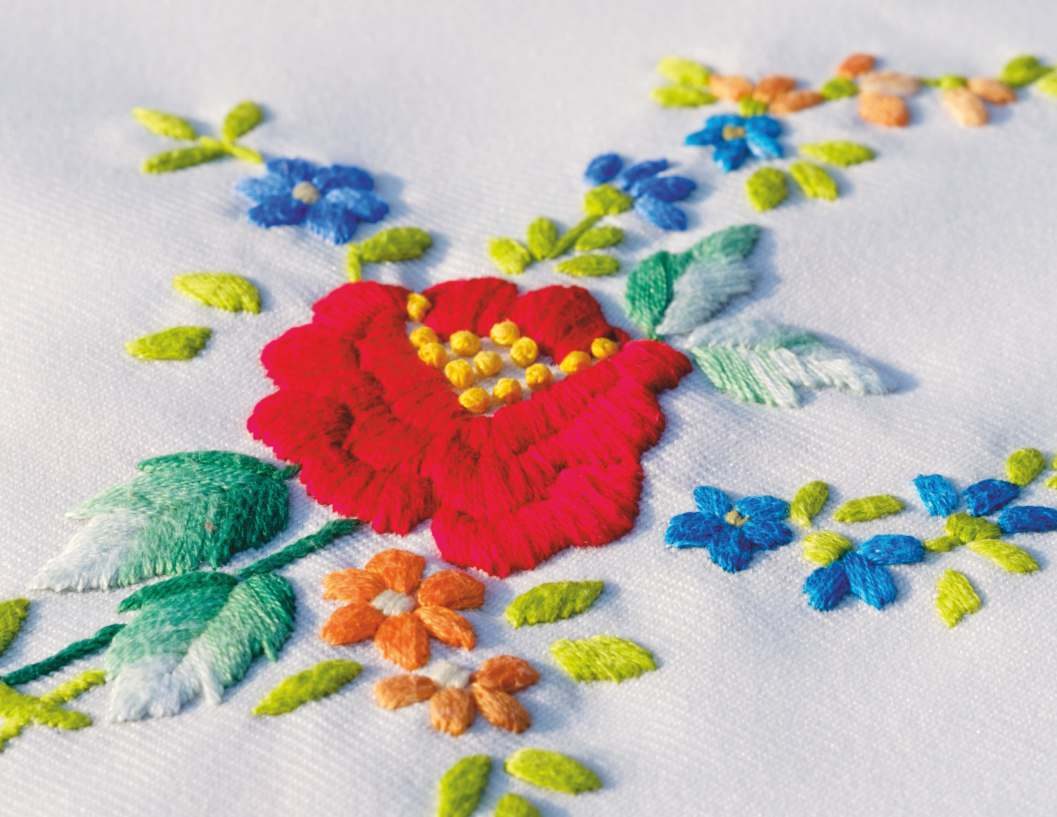
The word Phulkari comes from phul, flower, and kari, work. It is the folk embroidery of the Punjab and Haryana region, worked from the back of handspun cloth in a long darning stitch that fills the surface with colour. Though the name means flower-work, the designs hold far more than flowers — peacocks, paisleys, the open lotus, and the clean geometry of stars and diamonds.
In many households the embroidery was begun by a mother at the birth of her daughter and stitched slowly over the years, to be given to her at her wedding. A Phulkari was never only cloth. It carried the time and care of the woman who made it.
When the flowers become a garden
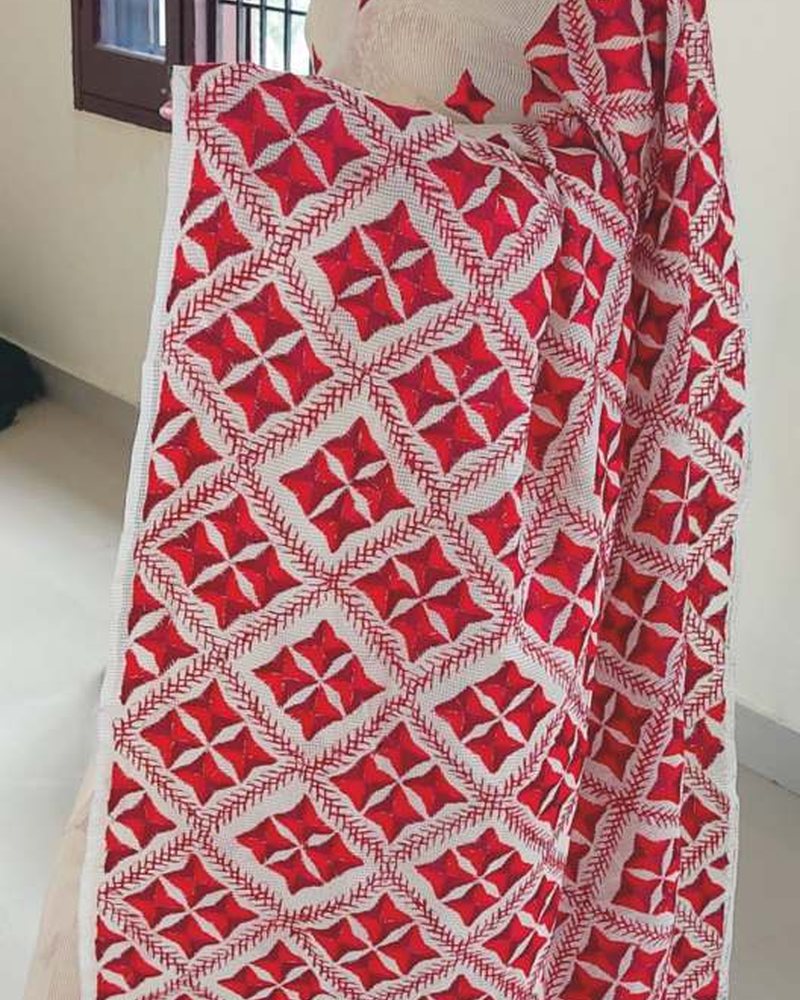
When the embroidery covers the cloth so fully that the base no longer shows, it is called Bagh — a garden. These are the most demanding pieces, often built from tight geometric patterns, and they were kept for the most important occasions in a family's life.
The Phulkari and Bagh both ask for a steady hand and an unhurried eye. There is no shortcut. The richness you see is simply hours, counted in stitches.
What the patterns say
Mor-morni
The peacock and peahen — the most loved motif of the region, a wish for companionship and good fortune.
The lotus & paisley
The open lotus and the curved paisley, drawn from older textile traditions and softened by Mughal-era design.
Stars & diamonds
Counted geometric fields, built one stitch at a time, that read as bright and orderly from across a room.
Every stitch worked by hand
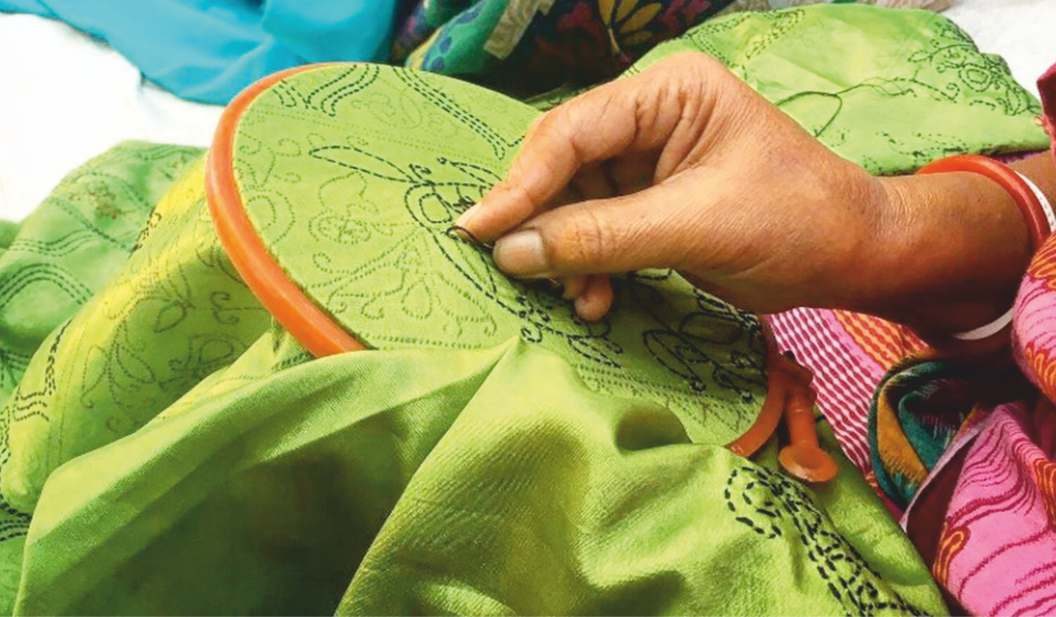
Everything we make is hand embroidery — there is no machine behind it. A piece begins as plain cotton and a drawn outline, and grows slowly under the needle as the artisan fills it with colour, stitch by stitch.
It is unhurried work that rewards patience. The same hands move from fine floral sprigs to the bold, counted geometry of Phulkari and Bagh, and the richness you see in a finished piece is simply hours, counted in thread.
“Designs may be ancient or newly drawn — but the cloth is still decorated the same patient way.”On the embroidery of Haryana